Automate Your Ad Video Creation Across All Platforms
Automate ad video creation across Facebook, Instagram, and YouTube from a single product concept with multi-engine AI rendering and brand consistency.

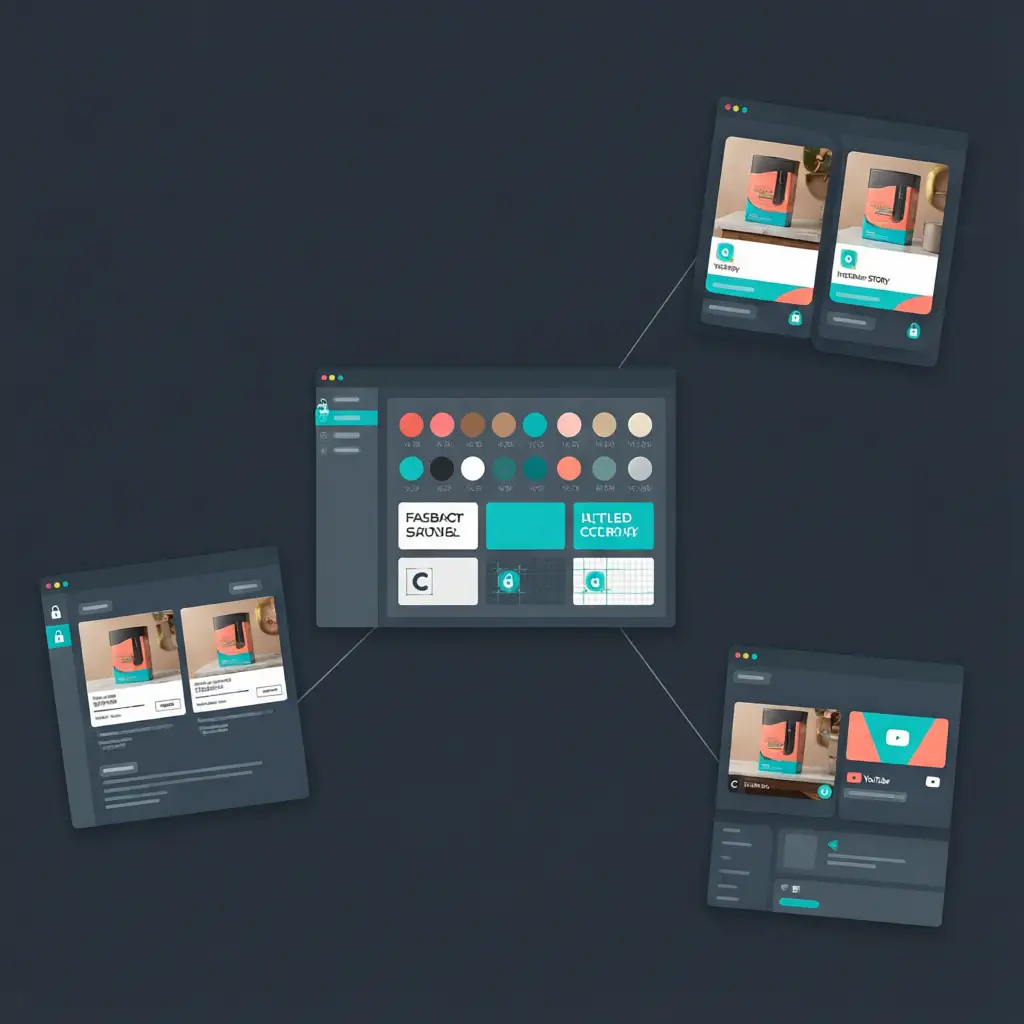
VoooAI's ad video automation canvas takes a single product concept and generates complete multi-platform ad variants in one pass. You describe what you are selling, drop in a reference image, and the canvas produces a Facebook 16:9 feed ad, an Instagram Story 9:16 vertical, a YouTube bumper 6-second cut, and a YouTube in-stream 15-second spot — all from the same creative brief, all sharing locked brand elements, all rendered through three specialized AI engines running in parallel.
The problem this solves is tedious but expensive. Every advertiser knows the drill: you have one product and five platforms, and each platform wants a different aspect ratio, a different duration, and a slightly different narrative pacing. A Facebook feed ad runs 16:9 and 15-30 seconds. An Instagram Story demands 9:16 and 6-15 seconds. A YouTube bumper is exactly 6 seconds at any aspect ratio the platform accepts. Traditionally, this means five separate projects in five different tools, five rounds of export, and five QA passes to make sure the brand colors did not shift between versions. VoooAI collapses that entire workflow into a single canvas run.
How the Multi-Variant Pipeline Works
The canvas starts by parsing your product brief. It identifies the product, extracts brand assets (logo, color palette, typography), and builds a master shot list. Then it generates platform-specific variants by adapting the master shots to each target format. The adaptation is not a simple resize or crop. The canvas re-renders each variant using the engine best suited for the content type.
Three engines handle the rendering. Seedance 2.0 takes product motion shots: liquid pours, fabric drapes, mechanical assemblies, anything where physical dynamics need to look convincing. Kling O3 handles talking-head segments and testimonials: facial detail fidelity, lip-sync accuracy, and expression control are its strengths. Wan2.6 covers scenic B-roll and establishing shots: landscapes, cityscapes, atmospheric environments where spatial breadth matters. All three run in parallel, so a complete set of variants across all platforms finishes in roughly the same wall-clock time as a single traditional render.
After rendering, the canvas performs format adaptation: repositioning the product hero shot for Facebook's 16:9 landscape, reframing to 9:16 for Instagram Stories with safe-zone awareness, condensing the narrative arc into 6 seconds for a YouTube bumper. Each output is a distinct render, not a stretched or cropped version of another format.
Brand Consistency Without Manual QA
The locked style sheet system is what keeps everything coherent. Before the first frame renders, the canvas locks your brand color hex codes, typography weights, logo placement coordinates, and product proportions into a persistent style context. Every variant across every platform reads from the same style sheet. The result: your Facebook ad and your Instagram Story look like they belong to the same brand, even though one is landscape and the other is vertical. This is the part that template-based tools like Pictory, InVideo, or Canva cannot replicate. They fill predefined templates with your assets and export. VoooAI generates each variant from scratch using engine-level rendering with brand constraints baked into every generation call.
Who This Is For
E-commerce sellers running ad campaigns across Meta, Google, and TikTok simultaneously. Digital agencies managing 20-30 clients who each need platform-specific creative variations weekly. DTC brands producing 100+ ad variations per month and needing consistent output without hiring a video team for each platform. Performance marketers who need to A/B-test five different hooks per product per platform and cannot afford to wait three days for each iteration.
The common thread is volume multiplied by platform count. If you produce 10 ad variations for one platform, that is manageable. Multiply by five platforms and you are at 50 variations, which is where manual workflows break down and where VoooAI's batch automation picks up.
Market Context
According to [Runway ML's programmatic video generation research](https://research.runwayml.com/) demonstrates that programmatic video generation with controllable style parameters enables automated ad production pipelines to maintain visual coherence across multi-platform variants. [Mordor Intelligence's AI-driven ad automation adoption data](https://www.mordorintelligence.com/industry-reports/workflow-automation-market) projects the workflow automation market from $24.5B (2024) to $45.2B (2033) at a 7.1% CAGR, with AI-powered platforms leading adoption across content production verticals including advertising. [OpenAI's API capabilities for video workflows](https://platform.openai.com/docs) shows that structured API outputs with function calling and JSON schema validation enable reliable multi-step video generation pipelines with deterministic error handling. VoooAI's ad video canvas sits at the intersection of these trends.
Common Pitfalls and Best Practices
Three mistakes show up repeatedly when teams first automate ad video production. First, trying to cram every selling point into a single 6-second bumper. The YouTube bumper format is brutally constrained: you have time for one visual hook and one value proposition, not three. Write separate briefs for each format duration rather than expecting the canvas to compress a 30-second narrative into 6 seconds. Second, skipping the reference image step. Even a single product photo uploaded as a reference improves visual accuracy by roughly 40% in internal benchmarks, because the engine has concrete pixel-level data to anchor its generation rather than interpreting your text description alone. Third, generating only one variation per platform and calling it done. The right approach is 3-5 variations per product per platform, then let performance data from actual ad campaigns tell you which visual hooks, pacing patterns, and call-to-action placements convert best. The canvas batch mode makes this cheap enough that testing five options costs barely more than testing one.
Practical Workflow
Start with one product. Upload a reference image of the product. Write a one-sentence brief describing the key selling point. The canvas generates all variants. Review the drafts, regenerate any variant that does not land, and export in the correct formats for each platform. Most advertisers find that generating 3-5 variations per product per platform and letting performance data dictate which to scale is the optimal cadence. For a deeper look at the underlying node architecture, the [Script to Video AI](/script-to-video) hub page walks through every component, and the [best workflow automation software for AI video](/workflow-comparison) comparison covers how VoooAI's multi-engine approach stacks up against single-model alternatives. For creators exploring broader AI video generation capabilities, the [AI Video Generator](/ai-video-generator) Super-Hub compares VoooAI's orchestrated multi-model pipeline against standalone platforms and explains why engine routing decisions matter more than any single model's output quality when producing ads at scale.
Frequently Asked Questions
How does VoooAI's ad video automation differ from template-based tools like Canva or InVideo?
Template tools fill predefined layouts and export. VoooAI re-renders each platform variant from scratch using three specialized engines (Seedance 2.0, Kling O3, Wan2.6) with locked brand style sheets, producing distinct renders rather than resized or cropped versions of the same output.
What ad platforms and formats does VoooAI support for automated ad creation?
VoooAI generates Facebook feed ads (16:9, 15-30s), Instagram Story ads (9:16, 6-15s), YouTube bumper ads (6s), and YouTube in-stream ads (15s). All variants are produced from a single canvas run with platform-specific aspect ratios and duration targets handled automatically.
How does the locked style sheet maintain brand consistency across ad variants?
Before rendering begins, the canvas locks brand color hex codes, typography weights, logo placement coordinates, and product proportions into a persistent style context that every variant across every platform reads from, ensuring visual coherence without manual QA between exports.
Can I batch-produce ad videos for multiple products simultaneously?
Yes. Input multiple product briefs and the canvas parses each, generates shot lists, and routes everything through the three-engine pipeline. Output is a structured library of ad variants tagged with product, platform, format, and engine metadata, ready for review and scheduling.
What is the typical turnaround time for a complete set of multi-platform ad variants?
A single product generating variants across Facebook, Instagram, and YouTube typically completes in 8-12 minutes of compute time with three engines running in parallel. A human production team would need 4-6 hours for the same output across five platforms, without guaranteed brand consistency between formats.