Script to Video AI for YouTube Shorts
Turn a written script into a publish-ready YouTube Shorts 9:16 vertical video in minutes. VoooAI parses beats, optimizes the hook window, and auto-renders.
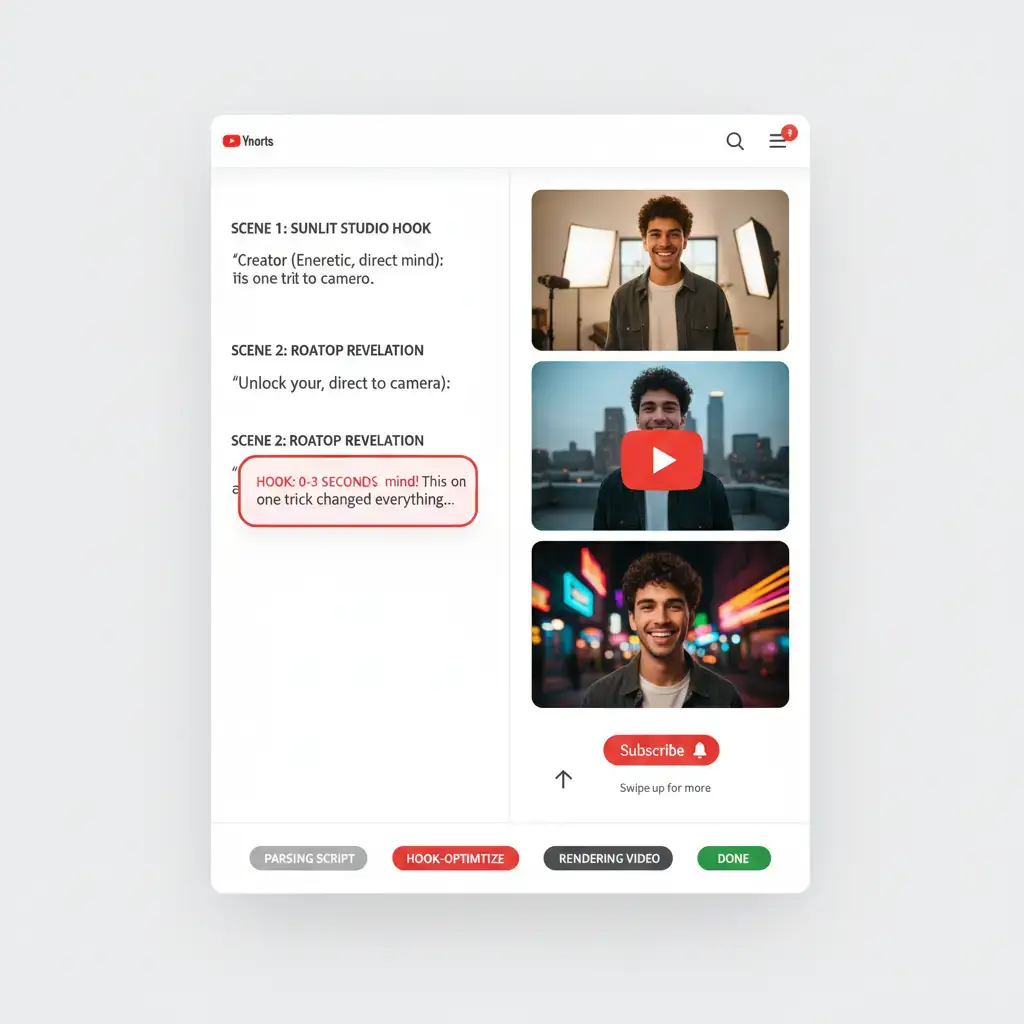
VoooAI Script to Video AI for YouTube Shorts turns a finished script into a publish-ready vertical short in minutes rather than the production days a human crew would book. The engine reads the script, breaks it into Shorts-sized beats, assigns on-camera language per beat, and renders 1080x1920 video tuned for the YouTube Shorts algorithm. Creators who already write weekly podcast notes, sketch ideas, or video essays in plain text gain the most, because the engine treats the script as the primary asset and treats every downstream rendering step as deterministic rather than a second round of creative labour.
How the Shorts Parser Reads Your Script
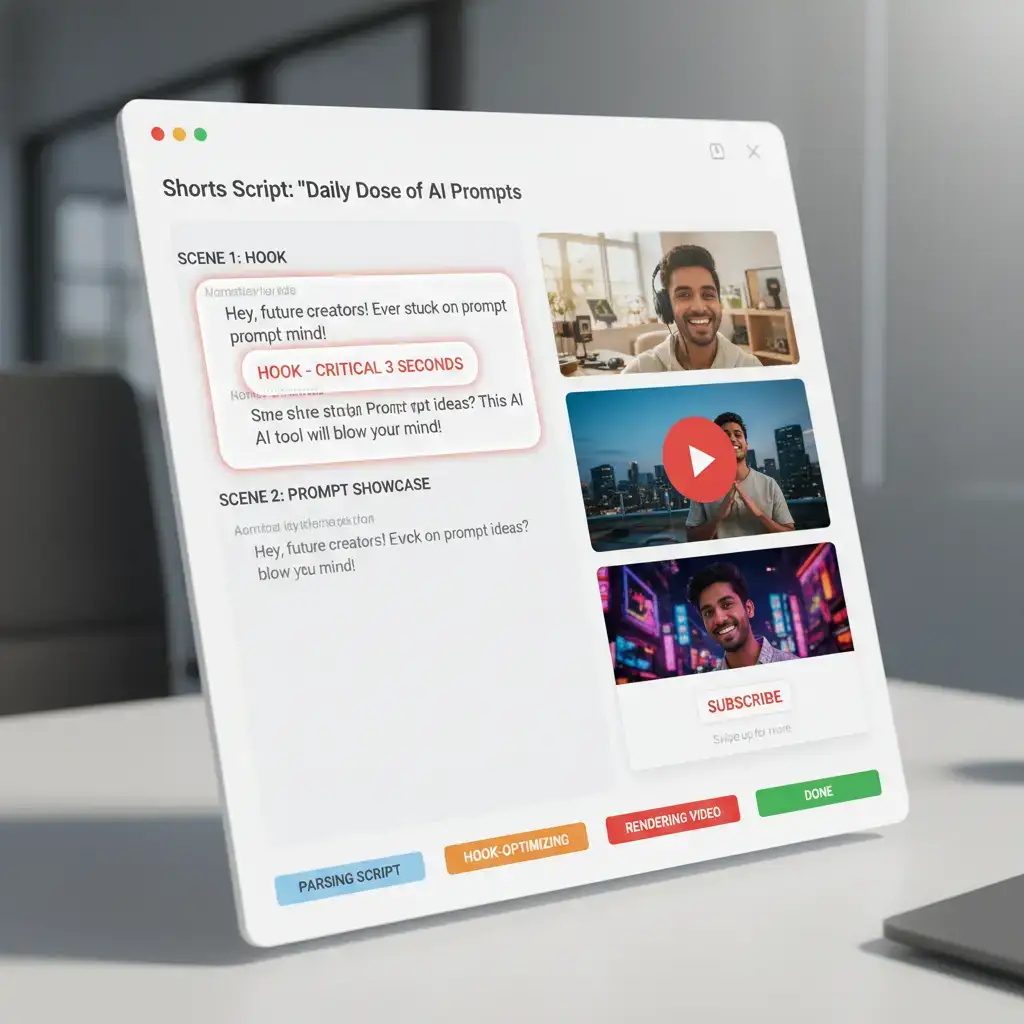
Paste a script into the editor or drop a markdown file and the parser splits it into beats by scene headings, identifies speaking characters, tags inner monologue separately from spoken dialogue, and hands a structured scene graph to the rendering pipeline. The Shorts parser differs from the TikTok variant in two small but important ways: it caps each beat at a maximum of nine seconds so the finished short fits inside the standard sixty second YouTube Shorts cap, and it marks the opening beat as a retention-critical hook so that the engine optimizes the first frame independently from the rest of the story. Long scripts over the Shorts duration are auto-sliced into a multi-episode arc with cliffhangers at natural act breaks, which keeps the original story intact while still respecting the platform-native cap.
Vertical Framing Tuned for the Shorts Algorithm
YouTube Shorts promotes videos to the Shorts shelf based on the first three seconds of watch time and the swipe-through rate on the second view. The engine encodes these two signals into the render plan. Every shot is framed for the 9:16 canvas, dialogue is cut so that the thumb-stop moment lands on a face or a strong action rather than an exposition line, and transitions snap to the soundtrack beat map rather than to a fixed interval. The finished short feels intentional rather than templated, even though it started as pure text, and that intentionality is what audiences read as production value.
Character Consistency From Hook to Final Frame
Shorts audiences abandon a channel the moment a protagonist changes face between episodes. The consistency engine locks facial geometry, hair, wardrobe, and lighting key to a single reference across every shot of the script. When a new character enters mid-script the engine generates a fresh reference the first time that name appears and reuses it for the rest of the piece. This two-pass design is what lets a solo channel publish a five-episode serialized Short arc where episode five looks shot on the same day as episode one, without asking the creator to track a reference bible by hand.
Why YouTube Shorts Rewards Script-Driven Production
YouTube's Shorts ranking model is unusually friendly to scripted output because its watch-time signal rewards retention structure more than raw aesthetics. Short scripted pieces with a hook, a turn, and a payoff regularly outperform beautifully rendered but unscripted clips, because the algorithm can read the engagement curve and promote shapes rather than pixels. According to [Sprout Social's 2025 short-form vertical video insights](https://sproutsocial.com/insights/short-form-video/), vertical short-form video is now the dominant consumption format across YouTube Shorts, TikTok, and Reels, and audiences move between the three platforms with almost identical expectations of pacing. Creators who script for Shorts can republish across the other two platforms with minimal adjustment, which is exactly why a script-first workflow compounds faster than a clip-first workflow for new channels.
Monetization and Channel Growth Fit
A Shorts channel that publishes daily scripted narrative content moves through the Shorts Partner Program eligibility gate faster than a channel relying on ambient clips, because scripted content produces longer average view duration and a healthier subscriber conversion rate. [Influencer Marketing Hub's creator monetization benchmarks](https://influencermarketinghub.com/video-marketing-statistics/) document that creators with repeatable narrative formats earn materially more per thousand views than those with inconsistent output, and the scripted pipeline turns narrative repeatability into a configuration choice rather than a willpower problem. For brand collaborations the same pipeline supports scene-level product swaps, so a sponsor can request a single shot regenerated with a different product without re-rendering the rest of the arc, which keeps the creator's iteration cost per brief close to zero.
Common Pitfalls When Converting a Script to Shorts
Three mistakes kill most script-to-Shorts attempts. First, over-long exposition: Shorts viewers swipe at roughly four-second intervals in the first fifteen seconds, so the engine must see which beats are expendable and which must stay. Second, ignoring the aspect hook: the strongest visual beat in the script should be marked for the opening shot even if it breaks chronological order, because retention on Shorts is decided before the audio even fades in. Third, skipping the end card: Shorts reward loops and replay signals, so the last beat should return a visual callback to the opening frame to trigger a second-view impression rather than a clean fade out.
Cost and Cadence Benchmarks Versus a Freelance Producer
A typical sixty-second vertical scripted short commissioned through a freelance producer averages around 1,500 dollars and a five to seven day turnaround. VoooAI completes the same output in roughly nine minutes of compute, and the creator spends about fifteen minutes on prompt refinement and final approval. That means a single Shorts channel can ship a fresh scripted piece every weekday rather than once a month, which is the cadence the Shorts algorithm rewards during the discovery phase of any new channel. According to [Exploding Topics' generative AI adoption trajectory](https://explodingtopics.com/blog/ai-statistics), generative AI adoption among content teams is growing at a multi-year compounding rate and video generation is one of the fastest growing subcategories, which is why the daily cadence described above is already standard among top performing Shorts channels and is quickly becoming the baseline for new entrants rather than a premium operating model.
Getting Started With Your First YouTube Shorts Script
New users should start with the Shorts preset, paste a single-page scripted scene of roughly sixty to ninety seconds, optionally drop a reference face for the protagonist, and let the engine render a first pass. Review the draft, regenerate only the scenes you dislike, and export the vertical short video ready for upload. For a deeper understanding of the node architecture that powers the pipeline, read our [Script to Video AI](/script-to-video) hub page, which explains every stage from script parsing to final cut and YouTube Shorts native export.
Frequently Asked Questions
How long should a script be for YouTube Shorts?
Keep the script between sixty and ninety seconds of screen time for the main format. Longer scripts are auto-sliced into a multi-episode arc with cliffhangers at natural act breaks, so you can still ship a full story without breaching the platform cap.
Can the engine optimize retention for the Shorts algorithm?
Yes. The Shorts parser marks the opening beat as retention-critical, optimizes the first frame independently from the rest of the story, and snaps transitions to the soundtrack beat map to protect the three-second hook window that decides most Shorts ranking outcomes.
Can I reuse the same character across multiple Shorts episodes?
Yes. The consistency engine locks facial geometry, hair, wardrobe, and lighting to a single reference so the same character appears identical from episode one through episode five, without asking you to track a reference bible manually.
What export specs does the engine produce for YouTube Shorts?
The engine exports a 1080x1920 vertical short video (H.264 video + AAC audio), ready for direct upload to YouTube Shorts. The same export is compatible with TikTok and Instagram Reels with no re-encoding required.
Does the pipeline support brand placements and scene-level product swaps?
Yes. You can regenerate a single shot with a different product image without re-rendering the rest of the arc, which keeps per-brief iteration cost close to zero and makes sponsored Shorts economically viable even for solo channels.